
DUI Charges in Marietta: What Defendants and Families Should Know
When someone you care about is charged with DUI in Marietta, Georgia, it's hard to know what to do next. Clear information about the law, the penalties, and the court process makes it easier to protect your rights and make good decisions.
Here's how Georgia DUI law works, what a conviction can mean, and how a defense lawyer can help.
What Counts as DUI in Georgia
In Georgia, DUI means driving or being in actual physical control of a vehicle while impaired by alcohol, drugs, or both. That includes illegal drugs and some prescription medications. Police don't need to see the car moving to make a DUI charge.
Georgia law doesn't require a specific level of impairment. Any reduced ability to drive safely may be enough. Local Marietta DUI attorneys can explain how these rules apply to your situation.
Blood Alcohol Concentration Limits
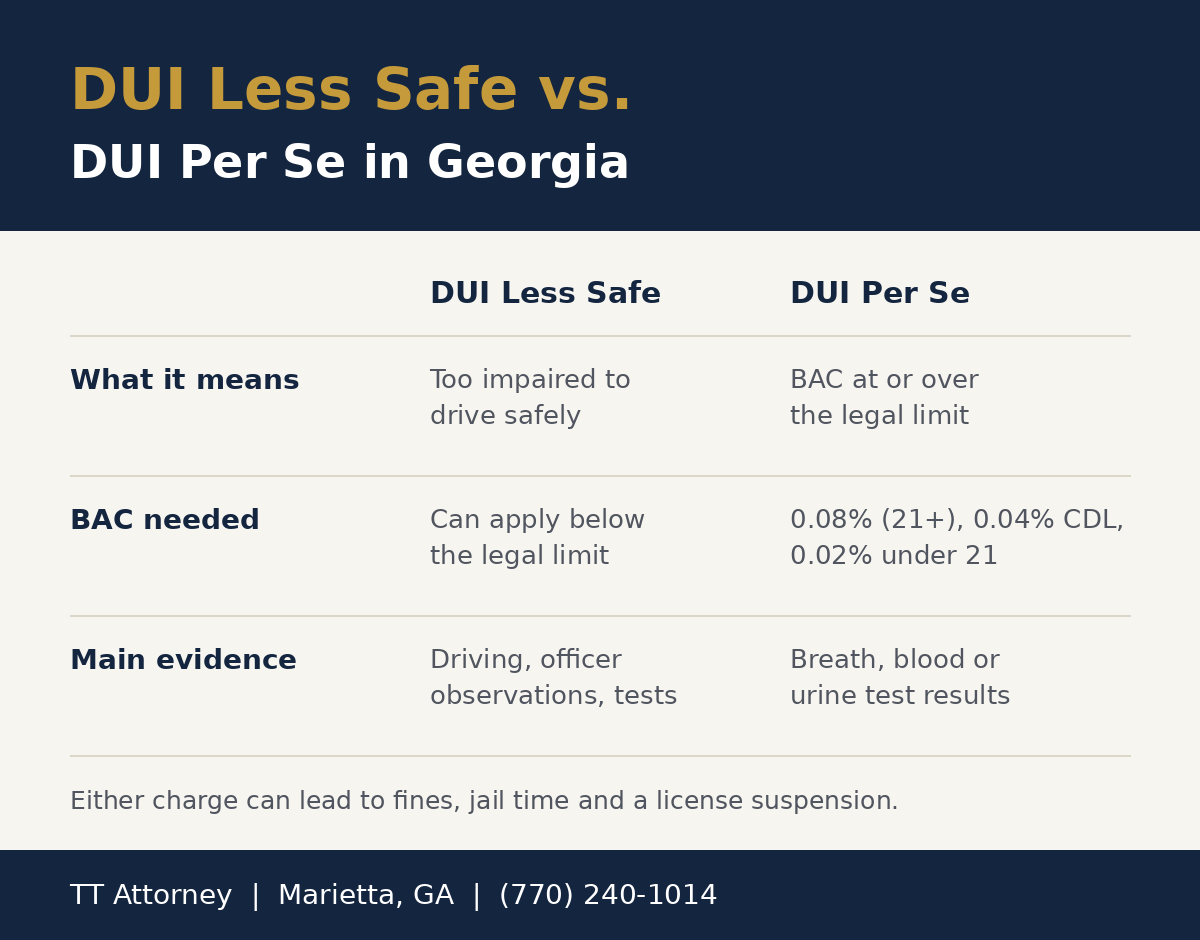
For drivers 21 and older, the legal limit is 0.08%. The 0.04% limit applies to operating a commercial motor vehicle that requires a CDL, and a DUI in a personal vehicle can also affect commercial driving privileges under separate rules. Drivers under 21 face a limit of 0.02%.
BAC is usually tested by breath, blood, or urine. Refusing to take a chemical test can lead to a license suspension under Georgia's Implied Consent Law.
DUI Less Safe vs. DUI Per Se
Georgia recognizes two main types of DUI charges:
- DUI Less Safe: there's evidence you were too impaired to drive safely, even if your BAC was under the legal limit.
- DUI Per Se: your BAC was at or above the legal limit. No separate proof of impairment is needed beyond the test results.
A first DUI is usually a misdemeanor, but it can still bring fines, jail time, community service, and a suspended license. Aggravating factors, such as a child in the car or causing an accident, make the charge more serious. Multiple DUIs can lead to longer suspensions, bigger fines, and even felony charges.
Consequences of a DUI Conviction
License Suspension
A DUI arrest can start an administrative license proceeding that's separate from the criminal case. Review the DDS notice and administrative suspension options right away so you understand what's proposed and how to respond.
The notice and the rules that apply determine effective dates, hearing requirements, and any permit options. Don't assume every arrest comes with the same temporary driving period. A suspension can make it hard to get to work or school, and while a limited permit may be available, it usually comes with strict rules and extra fees.
Criminal Penalties and Fines
Criminal penalties are separate from license consequences. Your attorney can explain any required jail time and what portion may be served on probation under the law for your charge.
Fines for a first DUI range from $300 to $1,000, and fees and court costs can push the total much higher. Repeat convictions bring longer jail time, higher fines, and longer suspensions.
Probation is almost always part of a DUI sentence. That means strict rules, court-ordered classes, and check-ins with a probation officer, and missing a requirement can lead to more penalties.
Community Service
Community service requirements depend on the offense and the facts of the case. Your attorney can tell you the minimum that applies and any additional court-ordered hours. Hours are usually completed with approved organizations by a court-set deadline, and missing it can bring more penalties.
Long-Term Effects on Your Record
A DUI conviction stays on your criminal record in Georgia and doesn't go away with time. Employers, landlords, and schools may see it in background checks. A DUI can also affect your insurance availability and premiums, depending on your insurer, policy, and driving history.
DUI Arrests and Testing
The Traffic Stop
Most DUI stops start with a suspected traffic violation, such as swerving, running a red light, or speeding. Your attorney can examine the legal basis for the stop, including any checkpoint procedure, and separately review whether police had grounds to detain and arrest you. Officer observations like slurred speech or the odor of alcohol are part of that review.
Field Sobriety Tests
Police may use three standard field sobriety tests: Horizontal Gaze Nystagmus, Walk-and-Turn, and One-Leg Stand. Officers watch for signs like trouble balancing or following directions, and the results help them decide whether to request a breath, blood, or urine test.
Refusing a chemical test can trigger separate license consequences. Answering questions or declining a field sobriety test is a different issue, so ask your attorney how the rules apply to what happened in your case.
How DUI Charges Move Through Court
After an arrest, the officer files a report and the case goes to the prosecutor, who files formal charges in court. You'll receive a court date and paperwork describing the charges. The charges depend on details like your BAC, whether minors were in the car, and any prior DUI convictions.
The case usually begins with an arraignment, where you enter a plea. If you plead not guilty, the case moves to motions and hearings, where your lawyer may challenge the evidence, and then to plea negotiations or trial. Confirm your court, dates, and deadlines from your case documents with your attorney.
Building a DUI Defense
Your Options After an Arrest
Once you're charged, you can consider a plea deal or fight the case in court, including challenging the evidence or how the arrest was handled. Get legal help quickly. Key early steps include:
- Talk to a DUI lawyer
- Request a hearing to challenge the license suspension
- Review the police reports and evidence with your attorney
Common Defense Strategies
Your attorney can examine the legal basis for the stop and for any further detention or arrest. If the stop wasn't legal, evidence may be challenged, though dismissal depends on the facts and the law.
Other defenses include:
- Challenging breath or blood test errors
- Showing the officer didn't follow proper arrest procedures
- Arguing the evidence doesn't prove impaired driving
These strategies can lead to reduced charges, lighter penalties, or a dismissed case.
Choosing and Working With a DUI Lawyer
Look for an attorney licensed in Georgia who handles DUI cases regularly and knows the local courts. Ask about their experience with cases like yours, who will handle your case day to day, and how they communicate. For a full checklist, see what to look for in a DUI lawyer.
Many DUI attorneys offer a free initial consultation, where you can go over the facts, the police report, and your options. Once you hire a lawyer, they'll gather evidence, negotiate with prosecutors, file motions, and represent you at hearings. Respond quickly to their requests and keep every court date, because missed deadlines can hurt your case.
Ask about fees up front. Some lawyers charge a flat fee, others bill hourly, and many offer payment plans. Get a written agreement that spells out what's included, such as court appearances and paperwork.
Talk With TT Attorney
If you or a family member is facing a DUI charge in Marietta or Cobb County, contact TT Attorney to talk through the charges, the license deadlines, and your defense options.